
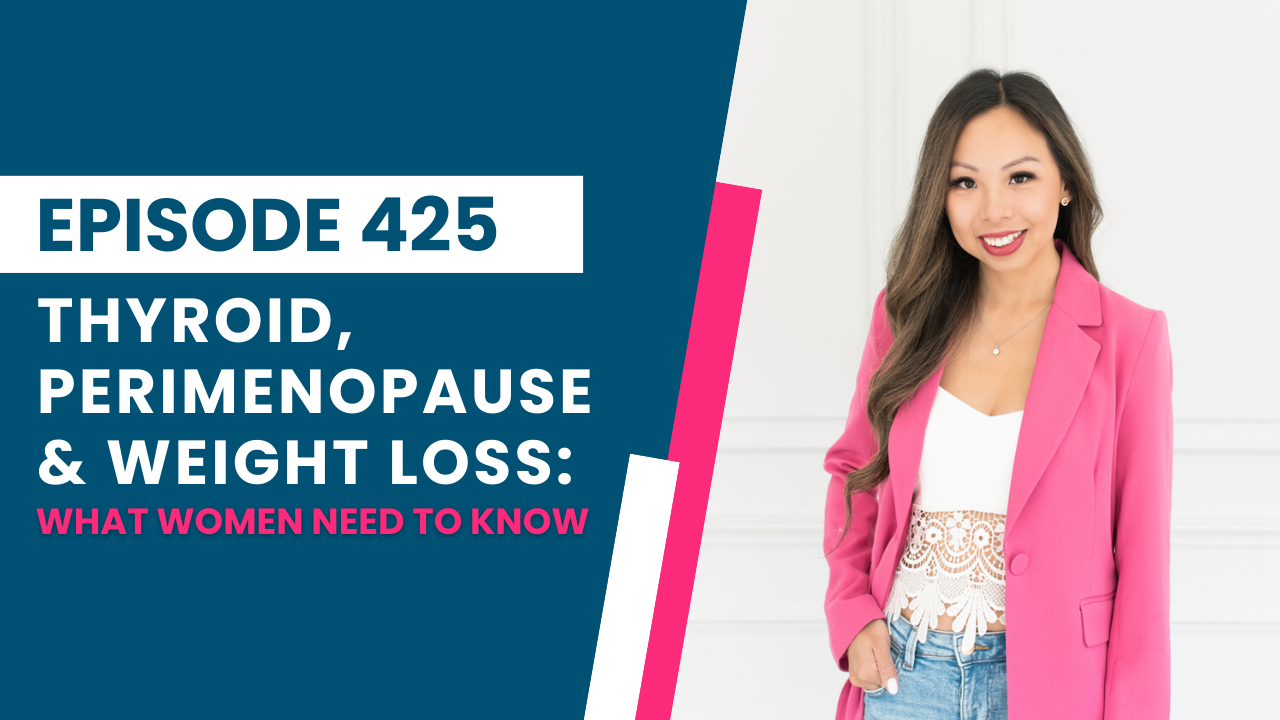
425: Thyroid, Perimenopause & Weight Loss: What Women Need to Know
Sep 04, 2025So many women come to me saying: “I feel like I’m doing everything right, but my body just isn’t responding the way it used to.” Maybe you’ve been there too—eating clean, exercising regularly, and yet still struggling with weight gain, fatigue, or mood swings.
Here’s the thing: it’s not just about willpower, and it’s certainly not about failure. Your thyroid and hormones may be playing a much bigger role than you realize.
In this week’s podcast, I had the privilege of sitting down with Dr. Rachel Vong, a Toronto-based naturopathic doctor who specializes in women’s thyroid health—particularly hypothyroidism and Hashimoto’s. We unpacked the connections between thyroid function, perimenopause, metabolism, and why so many women feel stuck when it comes to energy and weight.
Why the Thyroid Matters
The thyroid is a small, butterfly-shaped gland at the base of your neck, but don’t let its size fool you—it’s like the thermostat for your entire body. It influences:
-
Metabolism
-
Weight regulation
-
Appetite
-
Body temperature
-
Energy levels
-
Hair, skin, and digestion
When thyroid hormones are out of balance (especially in hypothyroidism), women may notice weight gain, low energy, hair thinning, constipation, or always feeling cold—even without changing their lifestyle.
Thyroid + Perimenopause: The Overlap
Here’s where things get tricky: many perimenopause symptoms overlap with thyroid dysfunction. Fatigue, weight changes, and mood swings can all be linked to either.
That’s why Dr. Vong stresses comprehensive blood work—because perimenopause isn’t something that shows up on one single test. If you’re told “it’s just aging” without further exploration, that’s your cue to dig deeper.
Don’t accept a brush-off. Advocate for yourself and get the full picture.
Beyond “Normal” Labs: Testing That Actually Helps
Most of us are familiar with TSH (thyroid-stimulating hormone), but that’s just the tip of the iceberg. Dr. Vong recommends a more thorough panel, including:
-
Thyroid antibodies (to check for Hashimoto’s)
-
Vitamin D, B12, and iron
-
Inflammation markers
-
Sex hormones (estrogen, progesterone, testosterone)
Remember: normal ranges don’t always equal optimal. Your body deserves more than “good enough.” You can be in the normal range, but still feel off.
Rethinking Metabolism and Weight
Your thyroid sets your body’s metabolic “set point.” When it slows down, weight loss gets harder—no matter how much you restrict or push yourself.
Dr. Vong encourages a mindset shift: weight gain isn’t your body betraying you—it’s your body protecting you.
Instead of blaming yourself, ask: what underlying stressors, inflammation, or imbalances need to be addressed?
Here’s where it all comes back to basics—but with a smarter, more compassionate approach.
-
Focus on anti-inflammatory foods
-
Balance your macronutrients (protein, carbs, and healthy fats)
-
Avoid chronic under-eating, which spikes stress hormones and makes weight loss harder
That old advice of “eat less, move more”? It doesn’t work when thyroid or hormonal shifts are at play.
Blood Sugar, Insulin, and Hormones
Another big piece of the puzzle is blood sugar regulation. As estrogen declines in perimenopause, insulin resistance often increases—making fat storage easier and weight loss tougher.
Testing tools like fasting glucose, fasting insulin, or even continuous glucose monitoring can reveal hidden imbalances. And remember: stress (whether from overtraining or emotional strain) directly impacts blood sugar.
Hashimoto’s: When It’s Autoimmune
Up to 90% of women with hypothyroidism actually have Hashimoto’s, an autoimmune condition where the immune system attacks the thyroid.
Supporting gut health, lowering inflammation, and managing stress become non-negotiables for slowing progression and protecting energy.
She reminds us: you have more control than you think.
Don’t settle for dismissive answers like “that’s just aging” or “your labs are normal.” If your body is sending signals—listen. Advocate. Push for comprehensive care. And above all, trust yourself.
Your thyroid and hormones don’t define you, but understanding them can give you back your power. With the right testing, nutrition, and mindset, you can shift from frustration to freedom in your body.
Your symptoms are valid. Your body isn’t broken. And you are not alone.
You deserve to feel good—not just “normal.”
Enter your email address to get weekly episodes delivered to your inbox plus tips on how to become a physically and mentally stronger runner!
Don't worry, we won't blow up your inbox. We just want to send you some great info to help you in your running journey. We hate SPAM, and we will never sell your information, for any reason.
