
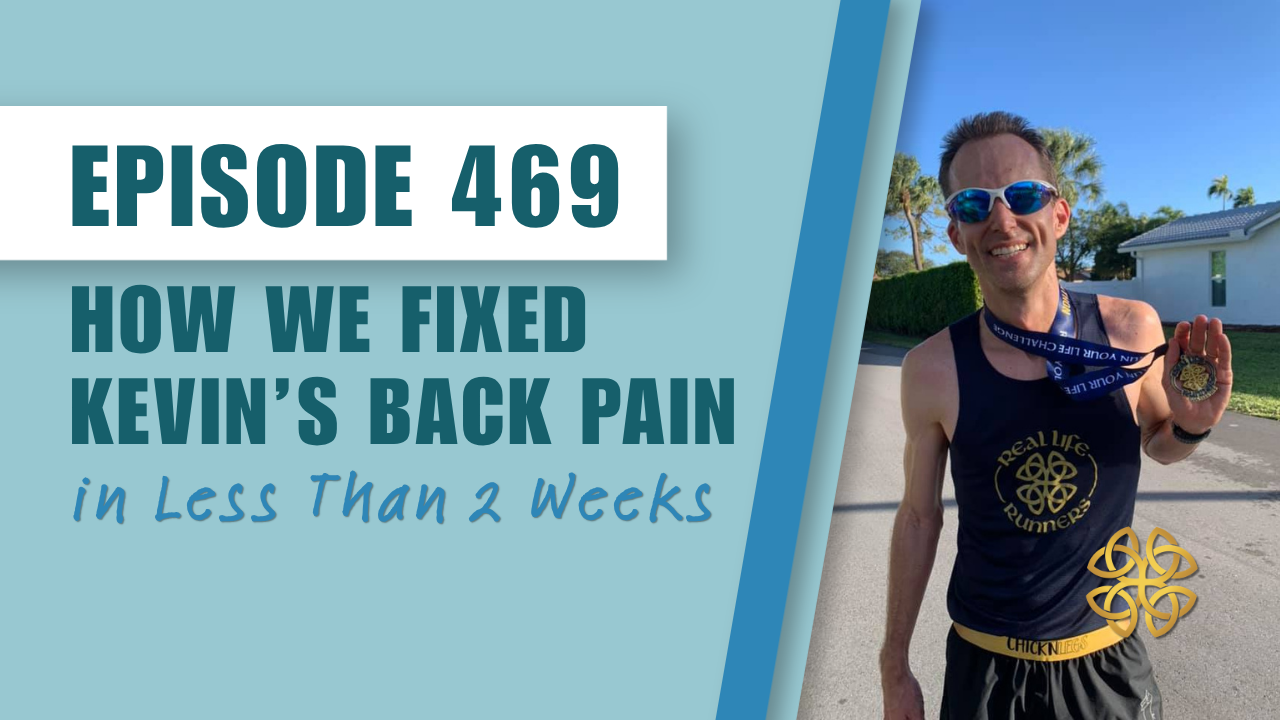
469: How We Fixed Kevin's Back Pain in Less Than 2 Weeks
Jul 09, 2026Why Your Back Pain Might Not Actually Be Coming From Your Back
If you've ever tweaked your back during a run or strength session, you know how quickly your mind starts racing.
Did I seriously injure something? How long am I going to be out? Should I stop running completely?
A few weeks ago, Kevin found himself asking those exact questions. What started as a small tweak while lifting turned into stiffness, pain, and frustration. Sitting became uncomfortable, running didn't feel right, and like many runners, his first instinct was to try to figure it out himself.
It didn’t work until he asked for help.
Less than three weeks later, he was back to 7 miles per day + a 14 mile long run pain-free.
It wasn't because we found a magic stretch or the perfect exercise. His recovery came from understanding why the pain was happening in the first place and giving his body what it actually needed to recover.
If you're dealing with nagging back pain—or really any recurring ache or injury—this story might change the way you think about recovery.
Pain Doesn't Always Mean Something Is Damaged
One of the biggest misconceptions I see is that pain automatically means you've injured the area that hurts.
Sometimes that's true. But many times, especially with runners, pain is your body's way of asking for attention rather than signaling serious damage.
Pain is influenced by much more than muscles and joints. Your nervous system, stress levels, previous injuries, movement habits, and even fear all play a role in how much pain you experience.
That means the painful area isn't always the actual problem.
In Kevin's case, his lower back was hurting, but his back wasn't necessarily the cause. It was simply the area that had been working overtime because other parts of his body weren't moving the way they should.
Yes, he hurt his back. But we had to find the underlying cause of why that injury occurred in order to help it heal.
Your Body Is an Amazing Compensator
Our bodies are incredibly good at finding ways to accomplish a task.
If your hips don't move well, your lower back will help.
If your upper back is stiff, another joint will pick up the slack.
Your body doesn't stop you from moving—it finds another way.
The problem is that compensation works...until it doesn't.
Over weeks, months, or even years, those small compensations add up. Eventually, the overworked area reaches its limit, and that's often when pain appears.
That's why simply stretching or massaging the painful spot doesn't always solve the problem. You're treating the symptom instead of addressing why that area became overloaded in the first place.
Step One: Restore the Movement You've Lost
The first thing we focused on wasn't strengthening Kevin's back.
It was restoring movement where his body had gradually lost it.
His hips were stiff. His upper back wasn't moving well. As a result, his lower back had been doing extra work every time he squatted, bent over, or ran.
As runners, especially as we get older, it's easy to assume stiffness is just part of aging. But more often, it's the result of spending hours sitting, repeating the same movement patterns, and gradually losing the mobility we once had.
The encouraging part is that mobility can improve. It follows the “use it or lose it” principle, which means to get it back, you just have to start using it again.
Slowly. Gently. And safely. Not forcing yourself into uncomfortable stretches or positions.
It doesn't happen overnight, but a few intentional minutes each day can begin changing how your body moves and feels.
Mobility Is Only Half the Equation
Here's where many people stop.
They regain some mobility, feel a little better, and assume the problem is fixed.
But your brain still remembers the old movement pattern.
Kevin had been squatting the same way for years. Even after his mobility improved, his body immediately returned to its old habits because that's what felt normal.
We started filming his movements, and what he thought he was doing looked very different from what was actually happening.
That awareness was a game changer.
Once he could see his movement, we could begin retraining it.
This process, called motor reprogramming, teaches your nervous system how to use your new mobility instead of falling back into old compensation patterns.
It isn't glamorous.
It's slow.
Sometimes it's frustrating.
But it's one of the most important pieces of long-term recovery.
Kevin kept saying how mentally exhausting it all felt. That's completely normal.
Changing a movement pattern that's been on autopilot for years requires focus. We slowed everything down, paid attention to breathing, and prioritized quality over quantity.
We're often so focused on finishing the workout or checking the box that we forget to pay attention to how we're moving.
Sometimes doing fewer reps with more intention leads to much bigger improvements than simply doing more.
Pushing INTO The Pain
When runners have pain, they usually take one of two paths:
- Push through the pain.
- Stop moving completely.
Neither is the best answer (except in the case of a bone stress injury — with a bone injury, rest is always the best option).
Instead, we gradually introduced movement that stayed within a tolerable level of discomfort.
Think of it like building confidence.
Each successful movement showed Kevin's nervous system that he was safe. Over time, his body became less protective, his muscles relaxed, and his movement improved.
That's very different from forcing your way through pain or avoiding movement altogether.
I taught Kevin how to find the edge of the pain. Move to that point, hold it, breathe, let the body relax, then move away from it.
That’s moving into the pain instead of through or away from it.
Returning to Running
Of course, Kevin wanted to know the same thing every injured runner wants to know:
"When can I run again?"
Instead of waiting until everything felt perfect, we used his symptoms to guide the process.
We started with shorter runs on flat terrain and monitored how he felt during the run, immediately afterward, and the next day.
If his discomfort stayed mild and his running form remained natural, we progressed.
If pain increased or his movement changed, we backed off.
Within two weeks, he was back to his normal weekday mileage.
Less than three weeks after the injury, he completed a 14-mile run pain-free.
Not because he rushed the process, but because he respected it.
The Bigger Takeaway
Kevin's recovery reminded me of something I see over and over again.
Our bodies are incredibly adaptable.
They're always responding to the information we give them.
When we improve mobility, teach better movement patterns, and gradually rebuild confidence, our bodies often become stronger than they were before the injury.
That's why I'm always encouraging runners to think beyond the painful area.
Instead of asking, "How do I get rid of this pain?"
Try asking, "Why is my body asking for help?"
That small shift in perspective can completely change your recovery.
This week, pay attention to how you move.
Notice how you squat to pick something up.
Notice how you get out of a chair.
Notice whether one side of your body always seems to work a little harder than the other.
You don't need perfect movement.
You just need awareness.
Because awareness leads to better movement. Better movement builds confidence. And confidence is what helps you keep running for years to come—not just through your next training cycle, but throughout your life.
Enter your email address to get weekly episodes delivered to your inbox plus tips on how to become a physically and mentally stronger runner!
Don't worry, we won't blow up your inbox. We just want to send you some great info to help you in your running journey. We hate SPAM, and we will never sell your information, for any reason.
